sv1/sv5fri

Installation and Configuration Script for Dxspider with Mojo

With this script you can install and configure in the few minutes the DxSpider Cluster with Mojo

For any issue or support relevant to script:

  1. Create issue ticket here
  2. Use comment or contact form

Installation Steps

With this script you can install and configure in the few minutes the DxSpider Cluster with MOJO repository

Installation Steps

Download script.

wget https://github.com/glaukos78/dxspider_installation_v2/archive/refs/heads/main.zip -O dxspider_installation.zip

Must be run as root user.

Uncompress & change permissions

unzip dxspider_installation.zip

cd dxspider_installation_v2-main/

chmod a+x install_dxspider.sh

Run script and follow the messages.

./install_dxspider.sh

Script has been tested on the following Operating Systems (Linux Distributions)

CentOS 7
CentOS 8
Rocky 8
Raspbian 9 (stretch)
Raspbian 10 (buster)
Raspbian 11 (bullseye)
Debian GNU/Linux 9 (stretch)
Debian GNU/Linux 10 (buster)
Debian GNU/Linux 11 (bullseye)
Ubuntu 22.04 LTS
Ubuntu 22.04.1 LTS
Fedora Linux 37 (Server Edition)
Fedora Linux 37 (Workstation Edition)
Bitx40 is under assembly status

I have started it to assembly in the temporally case my bitx40.

Also I have loaded it sketch raduino_v1.15 by Allard PE1NWL. The sketch provides additional features such as USB, CW, RIT/SPLIT etc. but these will only become functional when the related (minimal) hardware mods are made. I have make for the moment the modification for CW carrier.

 [print_gllr id=3452184]

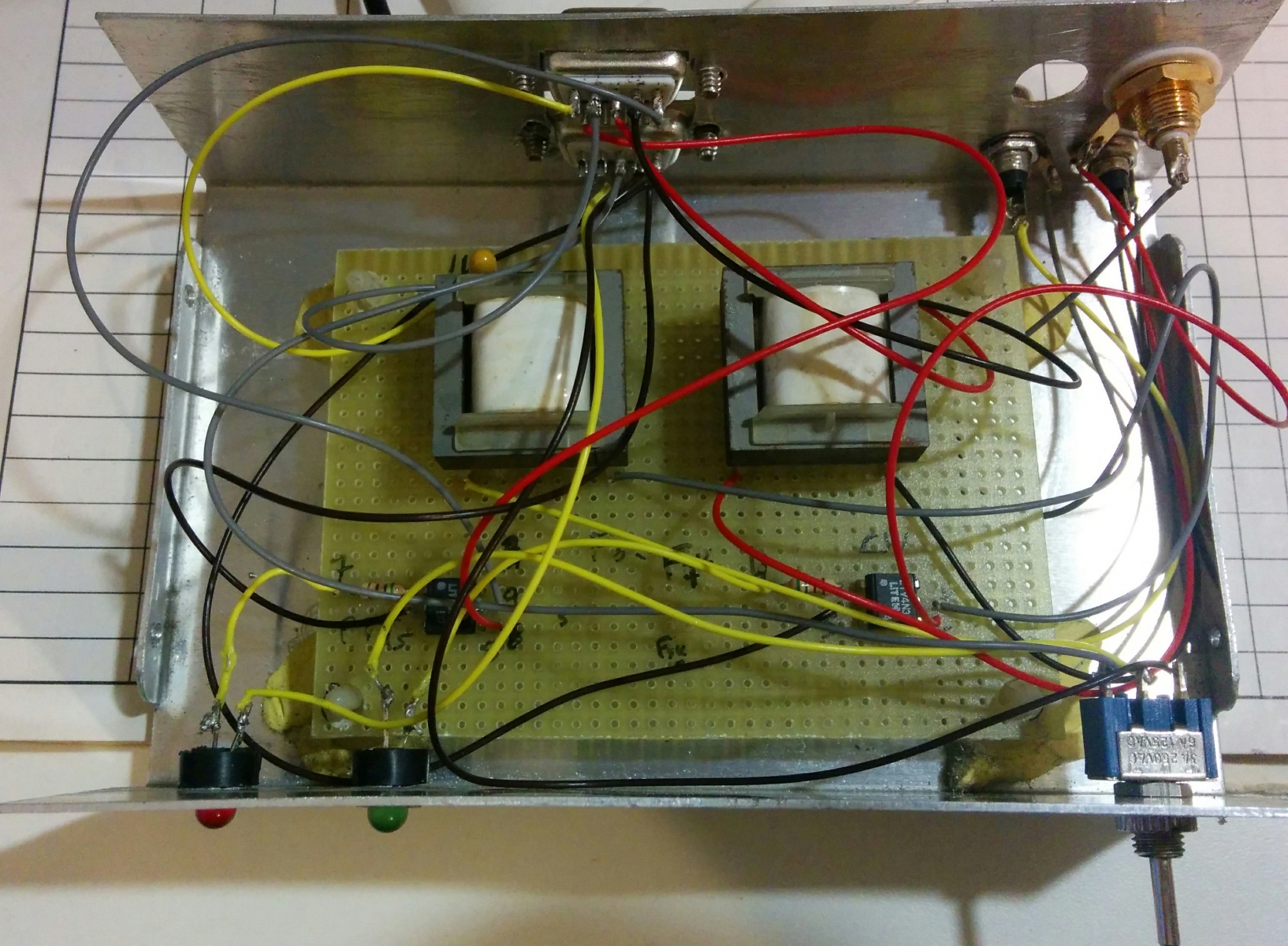
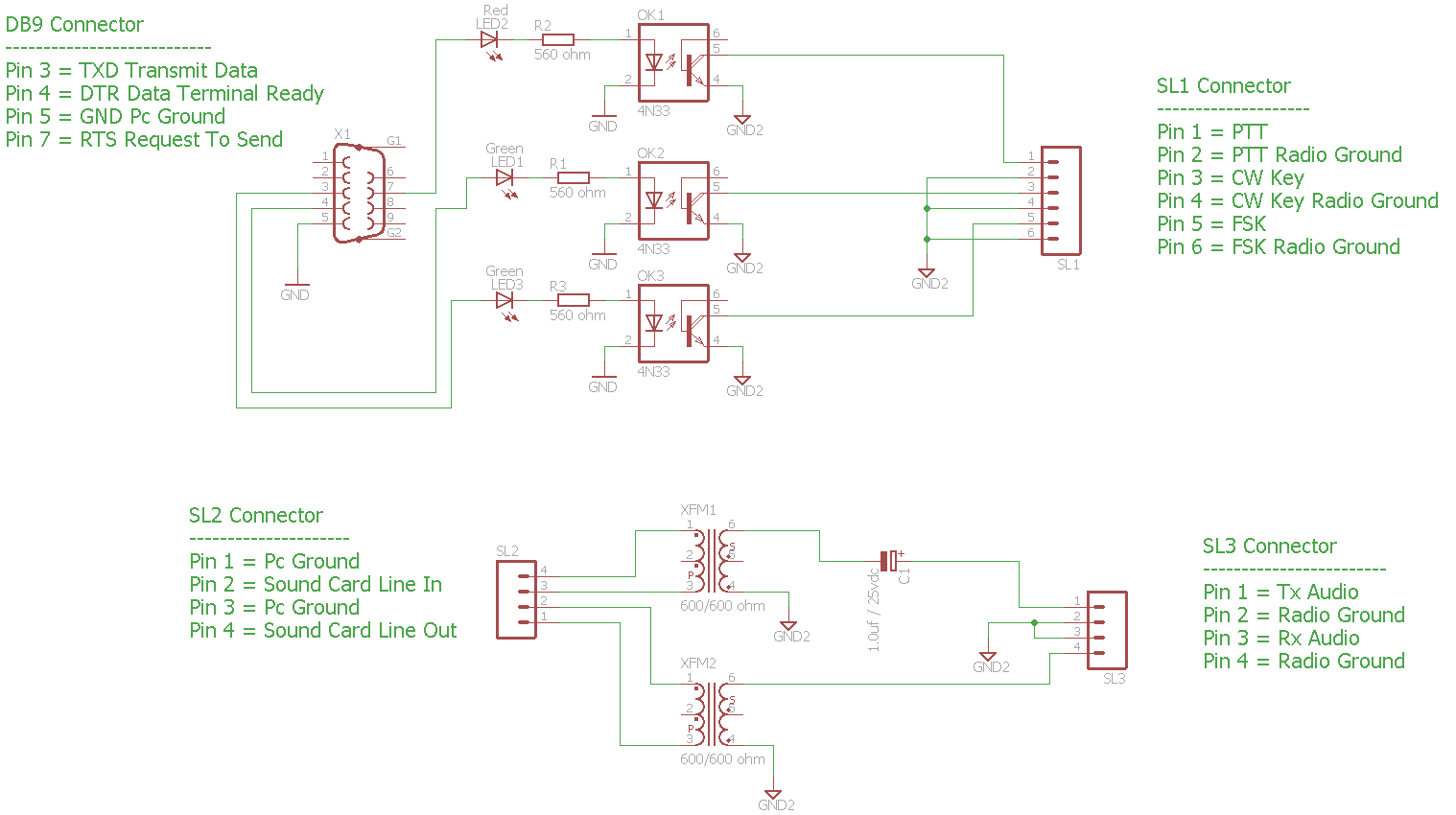
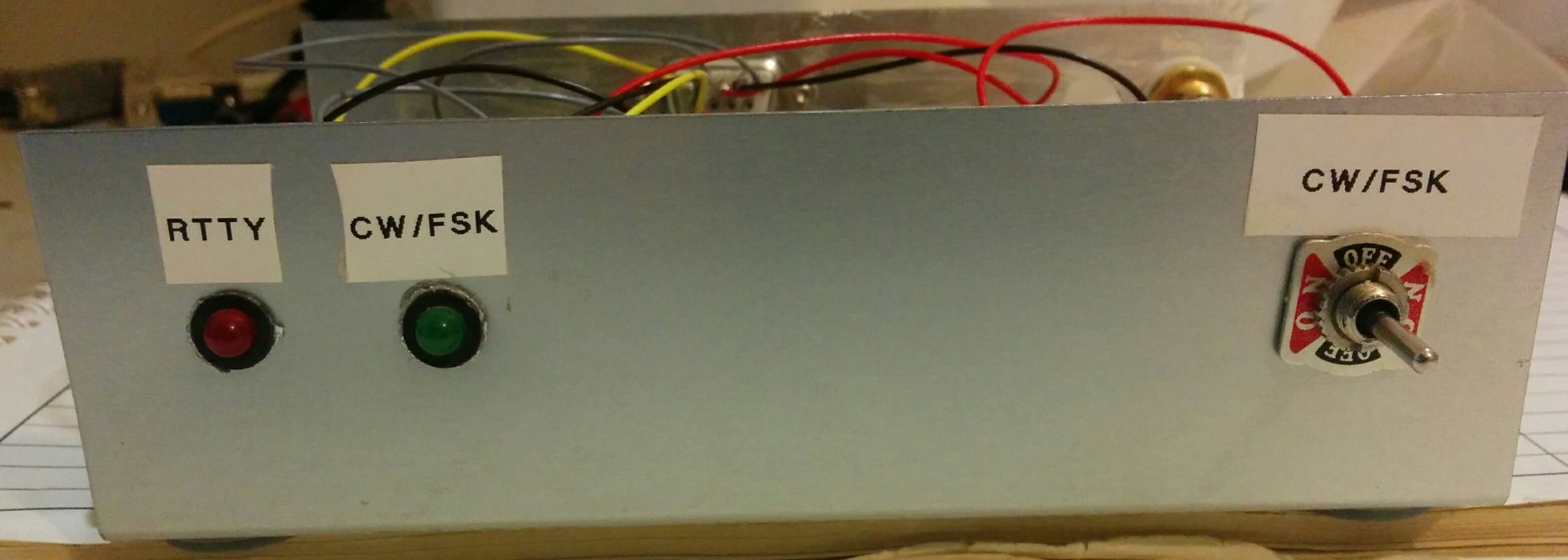
Sound Card Interface version 1.0

Here is my sound card interface. It works with all digital modes (RTTY, SSTV, PSK, etc.) and CW. This first version has a very simple design.

Furthermore, I have started designing a new interface with new features, such as USB sound card and RS232 to USB support.


Problem with TVI interference

My problem was that when I worked with 40m and over 40 watts of power, the TV (LCD) would start up and shut down automatically.

I tried different ways to solve this problem, but the results were disappointing. After many hours of studying, I found the solution:

The Combined Braid Breaker and High-Pass Filter.

This device prevents HF signal currents from flowing down the inner or outer part of the co-axial cable. L1 has low reactance to HF and VHF signals, bypassing the interfering current. Meanwhile, C1 and C2 have high reactance to HF and VHF, locking signals effectively to the receiver. L2 provides an additional short circuit for HF and VHF signals across the connections on the receiver side of the filter.

At UHF, the conditions are reversed. C1 and C2 present a low impedance path for signals to reach the receiver, while the impedance of L1 and L2 is so high that it can be ignored. R1 provides static discharge protection for the outer braid.

L1 and L2 comprise four turns of 20 SWG wire. 6 mm inside diameter. They are 6 mm long.

C1 and C2 are 4.7 pF disc ceramic capacitors.

R1 is a 1M5, 0.5-watt carbon resistor.

The single-sided PCB measures 25 mm by 50 mm and has grooves approximately 1.5 mm wide, leaving four areas of copper as shown.

The filter should be housed in a suitable aluminium case, with one side connected to the aerial downlead and the other to the TV aerial socket.